12 hr
Triglav National Park & Soča Valley Full-Day Adventure
Explore Slovenia's alpine heartland: waterfalls, emerald rivers, mountain passes, and a glacier lake across the Italian border
Reserve
Hand-picked by our editors — only the best 5 experiences from 42 reviewed
Verified partners for every tour, free cancellation where available, and instant confirmation on every booking.
12 hr
Explore Slovenia's alpine heartland: waterfalls, emerald rivers, mountain passes, and a glacier lake across the Italian border
Reserve
10 hr 30 min
Journey through emerald river valleys, alpine passes, and hidden waterfalls in Slovenia's mountain heart
Reserve
10 hr
Cross the Julian Alps via fifty hairpin bends, then meet the emerald Soča River and choose your own adventure in Bovec.
ReservePrices from verified partners. Availability updates in real time at checkout. Free cancellation policies apply where shown.
The landmarks, rooms, and views travelers on this tour remember — all visible on a single visit.
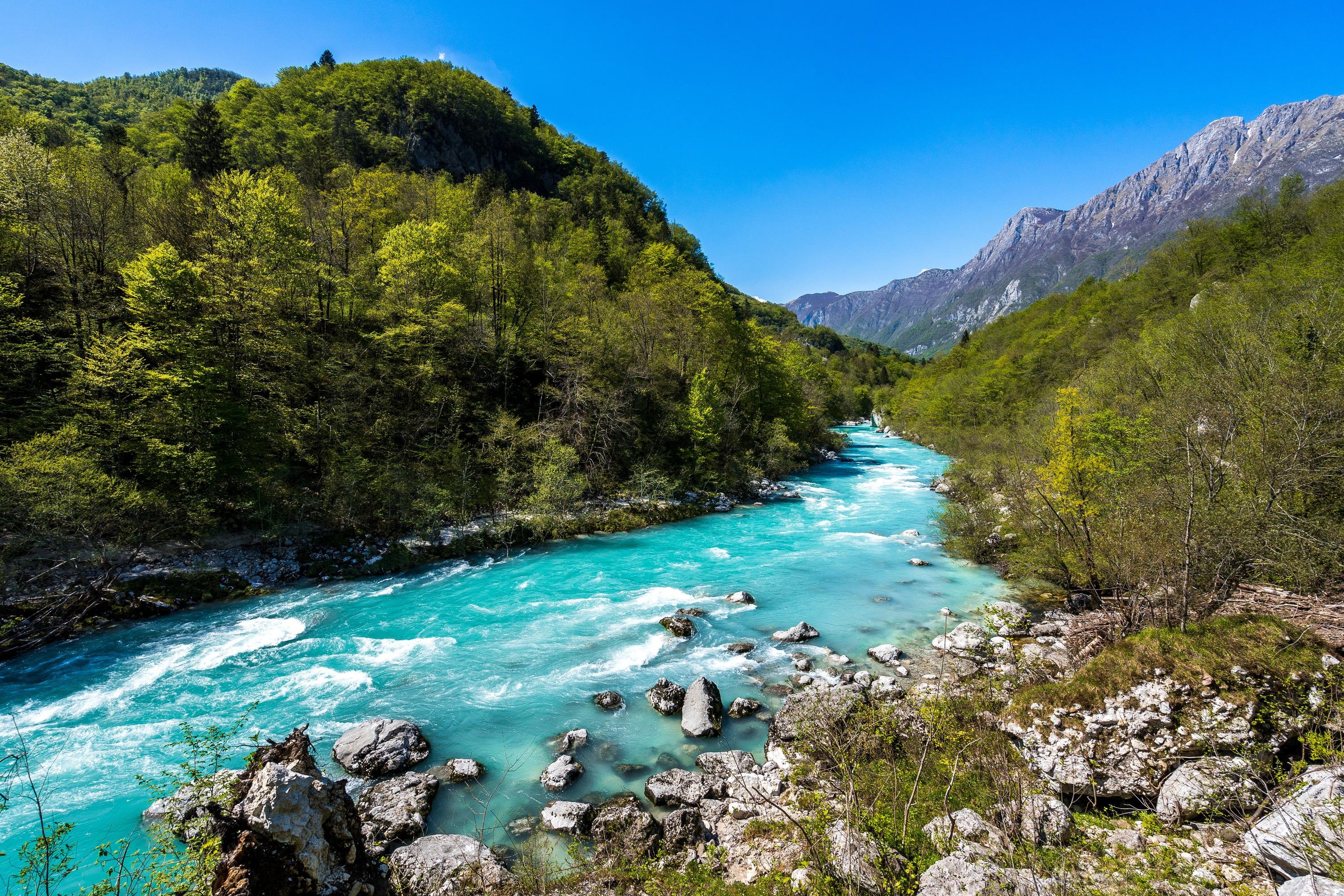
The river is famous for its distinct emerald-green color and limestone gorges. It serves as a central feature of the valley's ecosystem.
These narrow limestone passages are the lowest point of the park at 180 meters. The network of trails offers a look at unique karst phenomena.
As the highest road pass in the country at 1,611 meters, it connects the valley sides with 50 hairpin bends. It offers some of the most dramatic mountain views.
Standing at 2,864 meters, this peak is the highest in the country and a national symbol. It remains a classic destination for experienced mountaineers.
This valley is known for its traditional stone architecture and quiet atmosphere. It is one of the most well-preserved parts of the park's cultural landscape.
The Soča Valley focuses on river adventures and raw nature, while a Lake Bled day trip offers a classic cultural immersion in Slovenia's famous emerald landmarks. They complement each other; most visitors who do both call the river tour the more thrilling adventure.
| Feature | Top pick Soča Valley | Lake Bled |
|---|---|---|
Primary Focus |
River adventure and hiking | Alpine scenery and culture |
Terrain Type |
Mountainous and river gorges | Lakeside and hills |
Activity Level |
High | Low to Moderate |
Travel Time from Ljubljana |
2.5–3 hours | 1–1.5 hours |
Crowd Density |
Low to moderate | High |
| See tickets → |
Verdict: Choose a soca valley tour from ljubljana tickets option if you prefer rugged wilderness, or select a Lake Bled tour if you prioritize iconic views and easier access, though soca valley tour from ljubljana tours remain the superior choice for active travelers seeking soca valley tour from ljubljana tour engagement.
Choose your ticket, select your date, and reserve in under two minutes. Secure checkout handled by our verified partner.
Instant confirmation by email, with a mobile voucher you can save offline. No printing, no queuing at a collection desk.
Arrive at the entrance, show your voucher on your phone, and walk in. Most tickets include priority or skip-the-line access.
Practical details for your visit straight from our verified partners — hours, access, rules, and how to get there.
Wear sturdy hiking boots and moisture-wicking layers suitable for alpine weather. A waterproof jacket is essential even in summer.
Carry a lightweight daypack with necessary gear. Keep valuables secure and never leave belongings unattended at trailheads.
Drones are permitted with restrictions; ensure you stay on marked trails to capture the best shots of the landscape.
Most trails in the park are rugged and uneven. Some lower-elevation paths near lakes are more accessible to visitors.
Family-friendly paths are available at lower elevations. Always monitor children near riverbanks and steep areas.
Bring sufficient water and snacks for your hike. Mountain huts provide local refreshments during the summer season.
Best time to go, insider tips, nearby landmarks, and the cancellation fine print — flip through to skim what matters to you.
Flexible, no hidden fees.
As a national park, there is 0 EUR entrance fee. Tour bookings are subject to individual operator policies.
The Soča River cuts a 138-kilometre channel through the Julian Alps at gradients steep enough to carve vertical slot canyons, yet shallow enough in summer to reveal limestone bedrock polished white beneath water that holds its turquoise opacity even at depths exceeding two metres. The colour—a suspended glacial flour mixed with calcium carbonate—persists from the river's source below Triglav's north face to its confluence with the Isonzo plain, a phenomenon documented in hydrology journals since the 1970s and visible in satellite imaging as a mineral signature distinct from any neighbouring drainage. Triglav National Park, established in 1981 and expanded to 83,982 hectares in 2010, encloses the entire Soča watershed within Slovenia's borders, along with 24 peaks exceeding 2,000 metres and a network of karst springs that surface at altitudes ranging from 300 to 1,100 metres. The park's western boundary follows the Soča gorge through Bovec and Kobarid, towns that shifted from Austro-Hungarian rail terminals to whitewater hubs after the Isonzo Front dissolved in 1918. Stone footbridges, some dating to the 19th century, span the narrowest sections of the gorge, where the river compresses to widths of eight to twelve metres and produces standing waves classified as Grade III to IV in the international rafting scale. Vršič Pass, at 1,611 metres the highest paved road in Slovenia, connects the Soča watershed to the Sava valley via 50 numbered hairpin bends constructed by Russian prisoners of war between 1915 and 1916. The road remains open from late May through October, conditions permitting, and serves as the only vehicular corridor between the Trenta Valley and Kranjska Gora without descending into Italy. Stone markers at hairpins 8, 12, and 17 commemorate construction crews lost to avalanches during the pass's first winter. The pass's alpine meadows support populations of Triglav gentian and Zois' bellflower, endemic species restricted to elevations above 1,400 metres within a 40-kilometre radius of Triglav's summit. Ljubljana to Soča Valley excursions typically follow the A2 motorway northwest for 68 kilometres before diverging onto regional route 206 through Kranjska Gora, ascending Vršič, and descending into the Trenta Valley—a drive requiring two to two-and-a-half hours in each direction. The valley floor, between Bovec and Kobarid, offers access to suspension footbridges, gravel bars wide enough for kayak launches, and trailheads leading to the Kozjak waterfall and the Soča source spring. Most guided tours from Ljubljana allocate six to eight hours in the valley, with stops distributed between gorge viewpoints, alpine passes, and historic sites tied to the Isonzo Front's twelve battles. The river's gradient, bedrock composition, and seasonal melt cycle create conditions that have made the Soča a reference case in fluvial geomorphology studies and a training ground for European slalom teams since the 1980s.
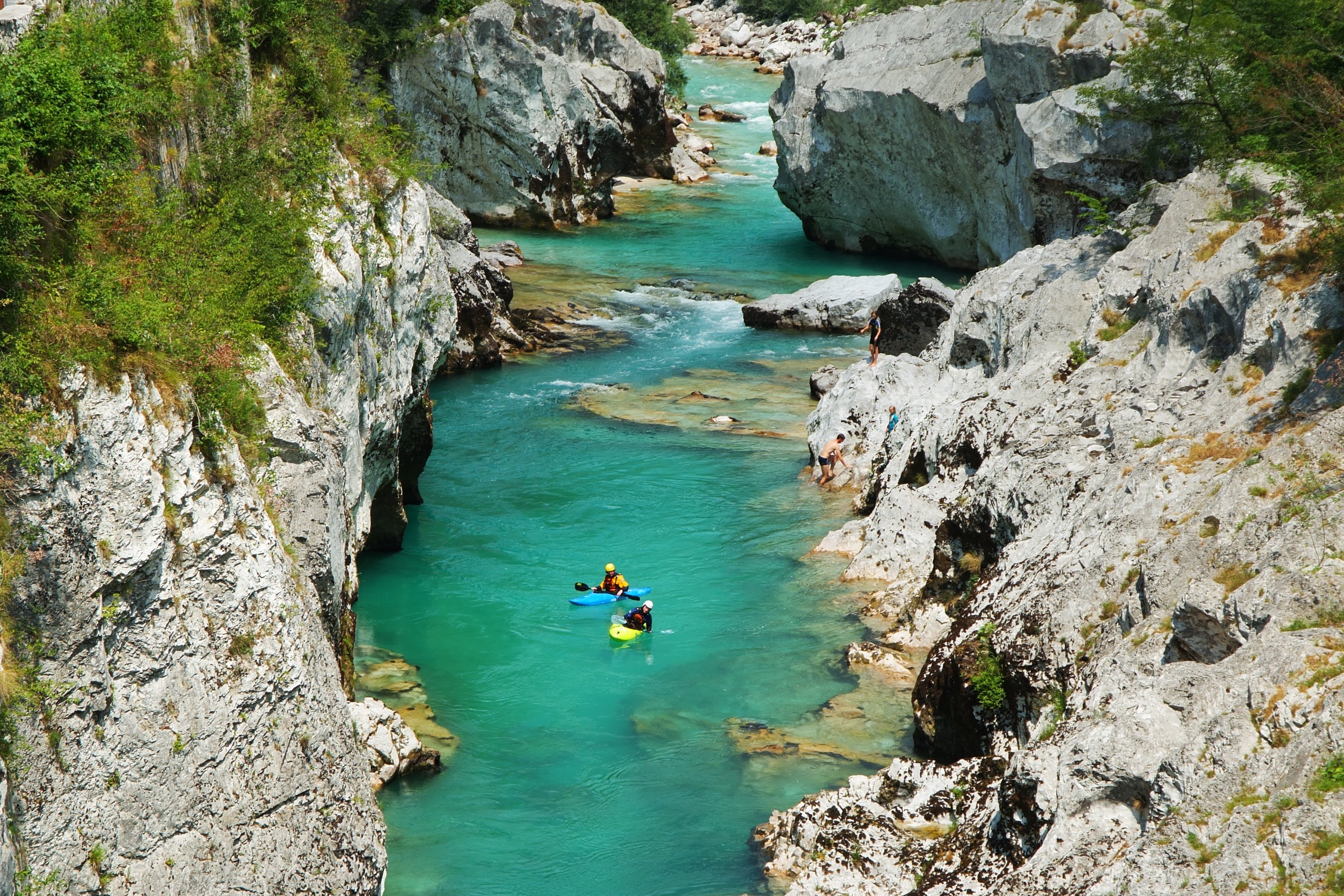
"The Soča holds its turquoise opacity even at depths exceeding two metres, a mineral signature visible from satellite imaging."
A step-by-step walkthrough of the visit — what you'll see, how long each stage takes, and the details that matter.
You depart Ljubljana in the early morning, tracing the A2 motorway northwest as the Kamnik-Savinja Alps rise into view along the northern horizon. The route narrows past Kranjska Gora, where the road begins its ascent toward Vršič Pass, each hairpin bend numbered with a stone marker and the grade steepening past hairpin 12. At the pass summit, 1,611 metres above sea level, you step onto gravel shoulder and scan the Julian Alps: Triglav's north face anchors the eastern range, while the Trenta Valley descends in switchbacks to the west, a green corridor framed by ridges still streaked with late-season snowpack. The descent delivers you to the Soča River at Trenta, where the water first reveals its signature turquoise—a glacial suspension that intensifies as the river gathers tributaries and carves through limestone. You follow the valley road downstream, stopping at stone footbridges that span the gorge where the river compresses to ten-metre widths and produces standing waves audible from the roadside. At Bovec, trails diverge toward the Kozjak waterfall, a 15-metre cascade set inside a limestone amphitheatre accessible via a footpath that winds through beech forest and crosses a wooden suspension bridge. The final stop, Kobarid, places you above the confluence of the Soča and Nadiža, where gravel bars stretch wide enough for kayak launches and the gradient flattens into braided channels visible from the ridge trail above town.
Triglav National Park is open daily from 00:00–23:59, allowing for flexible visit times. Entry to the park itself is 0 EUR, though specific attractions may charge fees.
There is 0 EUR entrance fee to Triglav National Park. Individual operators for your tour may include separate costs for activities.
The best arrival window is 07:00–10:00 to avoid mid-day heat. Plan your trip during the summer for the most stable weather conditions.
While most paths are open to all, mountain terrain requires a reasonable level of fitness for participants. Families should check specific tour requirements.
Bring sturdy boots, waterproof gear, and water. Conditions in the park can change quickly regardless of the season.
Yes, it is highly recommended to secure your spot for any excursion through the park.
Photography is encouraged. Respect the natural environment and stick to marked trails when capturing your images.
Many tours include stops at local huts or villages. We recommend bringing extra snacks and water for the journey.
Cancellation policies are determined by your specific tour operator. Please check your booking details for the concrete refund window.