English| EUR
Suggested for you
More currencies
Choose a language
The Soča Valley sits in a transition zone where Mediterranean air meets alpine cold, producing weather that shifts faster than most mountain regions. Understanding the valley's microclimates—from the river gorge floor to the high karst plateaus—determines whether you pack for sun or sudden storms.
Quick answer
Soca valley weather varies sharply by elevation and season: summers (June through August) bring daytime highs of 24–28°C at valley level with occasional afternoon thunderstorms, while spring and autumn see 12–18°C with longer rain windows. Winter temperatures drop to −2°C to 6°C, with heavy snowfall above 1,000 meters closing higher trails from December through March. The valley's position between the Julian Alps and the Adriatic creates rapid weather shifts—clear mornings can turn to rain within two hours.
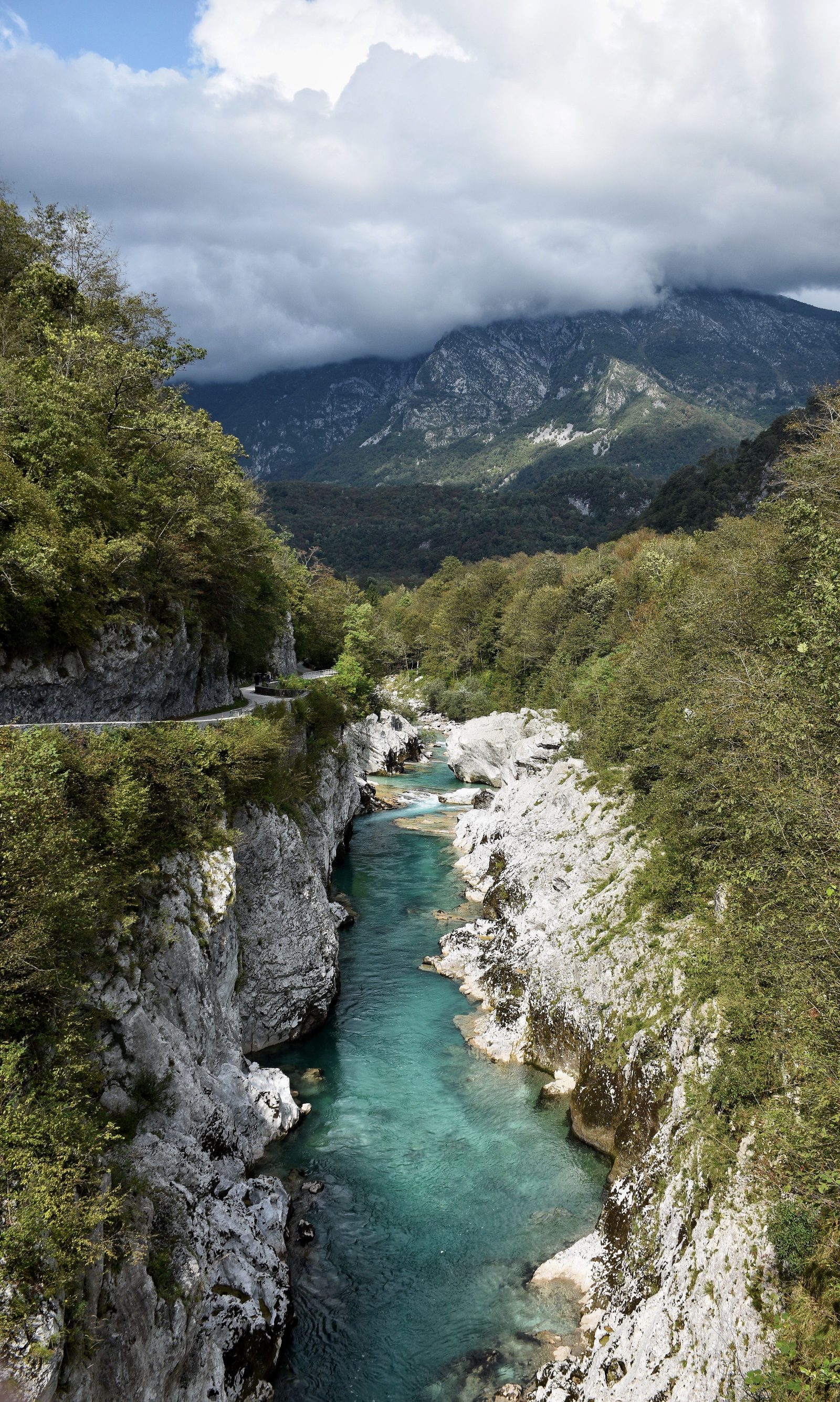
The Soča River drops 3,000 vertical meters from its source below Triglav's north face to the Adriatic plain, and the weather changes just as sharply. At Bovec, the valley's northern anchor at 480 meters elevation, you are already deep in alpine climate—July averages 22°C, but night temperatures can fall to 10°C even in midsummer. Move south toward Kobarid and Tolmin, and the valley floor warms by three to five degrees as Mediterranean influence pushes inland through the Isonzo gap. Rainfall defines the rhythm here more than temperature. The Soča basin records some of the highest precipitation in Slovenia—between 1,800 and 3,000 millimeters annually depending on elevation—with two wet windows. April through early June brings steady frontal rain as Atlantic systems stall against the Julian Alps. October and November see a second peak, often more intense, when warm Adriatic moisture collides with the first alpine cold. Summer thunderstorms are frequent but short: a towering cumulonimbus builds over the ridges by 2 p.m., dumps rain for forty minutes, then clears. Winter snowfall is heavy above 1,000 meters—the Kanin massif above Bovec receives up to six meters of snow between December and March, while the valley floor sees rain mixed with occasional wet snow. Microclimates matter. The Tolmin Gorges, carved 60 meters below the surface, stay cool and shaded even in August. The high karst plateaus—Komna, Krasji Vrh—sit exposed to wind and hold snow into May. The emerald pools near Kobarid warm to 12–15°C by July, cold enough to shock but swimmable on hot afternoons. Local knowledge centers on the morning sky: if you see clear blue over the Krn massif at 8 a.m., you have four to six hours before convective buildup. If clouds are already clinging to the ridges at dawn, rain is likely by midday. Practical implications: June offers the longest daylight and the most stable weather, though river levels remain high from snowmelt. Late September delivers warm days, cool nights, and lower water, ideal for photography and gorge hikes. July and August see the heaviest visitor pressure and the least predictable afternoon weather. Winter closes the high routes entirely—Vršič Pass and the Mangartsko Sedlo often remain snowbound until late May. The valley itself stays accessible year-round, but the experience contracts to low-elevation trails and the towns.
“The Soča basin records some of the highest precipitation in Slovenia—between 1,800 and 3,000 millimeters annually depending on elevation.”
The Soča Valley experiences an alpine climate characterized by significant precipitation and seasonal temperature shifts, making late spring and early autumn the most stable periods for outdoor activities. Planning outdoor excursions between 08:00–10:00 is essential to avoid the typical afternoon thermal convection, which often brings cloud cover and rain to the Julian Alps.
Cool, 12°C–20°C
Snowmelt increases water levels, ideal for early-season rafting and blooming alpine meadows.
Warm, 18°C–28°C
Peak summer heat with higher probability of localized afternoon thunderstorms in the mountains.
Mild, 10°C–20°C
Stable conditions with clearer skies, perfect for hiking and canyoning before the first snow.
—
Starting between 08:00–10:00 provides cooler temperatures and avoids peak trail congestion.
Verdict: The best time to visit for stable weather and thinner crowds is during the mid-week periods of May, June, September, or October, arriving between 08:00–10:00.
The Soča Valley remains accessible to visitors 24 hours a day throughout the week. While the natural landscape is open daily, please note that specific visitor center services and facilities operate according to their own administrative schedules.
Access to the Soča Valley is free of charge, as there is no general admission fee for entering Triglav National Park. However, specific managed sites within the region may require their own entry fees regardless of weather conditions.
Verdict: A typical visitor pays 0 EUR for valley access, though local site-specific fees fluctuate based on individual facility policies.
The Soča Valley is located in the western reaches of Triglav National Park. Access is primarily achieved via road networks, though travelers should monitor local conditions as high-altitude mountain passes frequently close during periods of adverse weather.
Vršič Pass (from Kranjska Gora) to Bovec
Arriva bus line from Ljubljana to Bovec
Slovenian Railways to Most na Soči station
To avoid mid-day crowds and enjoy cooler temperatures for hiking, the best arrival window is 08:00–10:00.
The Soča Valley's alpine climate demands proper preparation — pack layers and check forecasts before you set out.
Everything you need to know about soca valley weather
The soca valley weather is generally pleasant in summer, but mountain conditions can change rapidly throughout the day. Checking local forecasts before your outdoor activities is essential for your safety. Alpine air often stays cool even during the warmest months in Triglav National Park. Proper gear for changing soca valley weather helps ensure a comfortable experience while navigating the limestone terrain. Sudden shifts in atmospheric pressure occur frequently in high-altitude environments, so hikers should remain vigilant. Monitoring the soca valley weather patterns allows you to enjoy the emerald river and surrounding peaks safely. We recommend arriving between 08:00 and 10:00 to avoid mid-day crowds and enjoy cooler temperatures for hiking. This early window provides the most stable conditions for exploring the natural landscape. Entry to the valley itself is 0 EUR, though specific sites like gorges or museums may charge individual fees. This fee structure allows for flexible exploration across the region. The valley is welcoming for families, provided you prepare for variations in temperature and terrain. Keep in mind that accessibility to specific trails may depend on the recent weather. If rain is forecast, it is safer to stick to lower-altitude paths or visit indoor cultural sites. Always prioritize checking official updates for current conditions before setting out on your journey.
Soča Valley Tour with Kranjska Gora
Read more GuideThings to Do in Soča Valley
Read more Tickets & toursSoča Valley Tour from Bled
Read more Tickets & toursSoča Valley Bike Tours
Read more Tickets & toursSoča Valley Tour from Ljubljana
Read more Tickets & toursSoča Valley Day Trip
Read more Tickets & toursSoča Valley Wine Tours
Read more Tickets & toursSoča Valley Day Trip from Ljubljana
Read more